
How Does AS2Educate Support Attendance and Engagement?
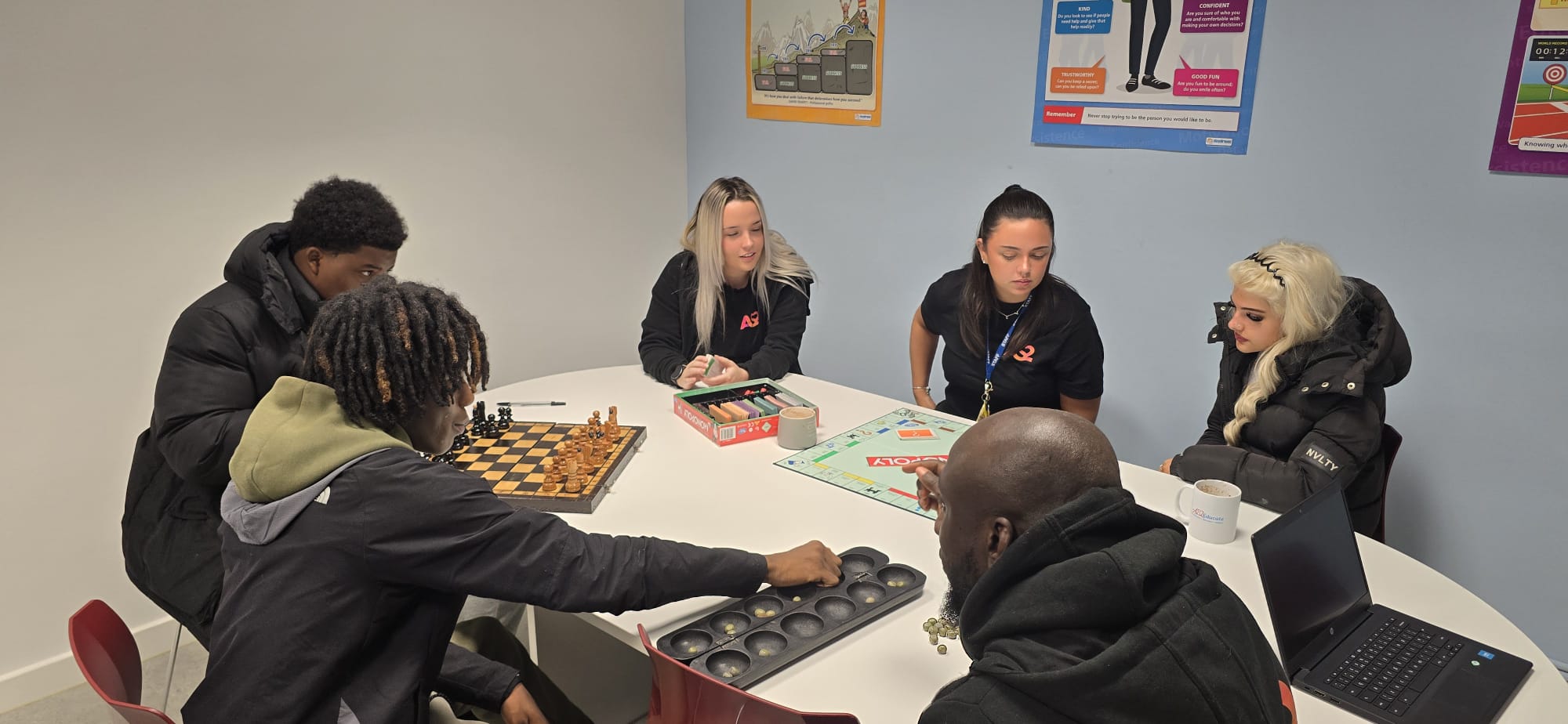
At AS2Educate, many of the young people we welcome have experienced periods where attending school became extremely difficult. Some have spent months with very limited attendance. Others attended but struggled to stay in lessons, or found that anxiety made each school morning harder than the last.
Emotionally based school avoidance, often referred to as EBSA, describes young people who find it difficult to attend school because of emotional factors such as anxiety, low mood or feelings of being overwhelmed by the school environment. For these students, the barrier is rarely a lack of willingness. It is a level of distress that can make walking through the school gates feel impossible.
As a KS4 and Post-16 Alternative Provision for young people aged 14–18, AS2Educate was built for young people who need education to look different in order for it to work. Our approach to supporting students affected by school avoidance combines structure, consistent relationships and a calm, predictable environment. From there, young people can rebuild trust in education and begin moving forward again.
Understanding Each Young Person
Every young person who comes to AS2Educate has their own story, and the reasons behind school avoidance are rarely the same from one student to the next.
Anxiety, SEMH needs, previous negative experiences in education, social difficulties, trauma or circumstances outside of school can all contribute to persistent absence. For many of the young people we support, several of these factors are present at once.
This is why our referral process is designed around understanding the individual. Referrals are reviewed carefully to establish whether AS2Educate is the right fit. Where appropriate, a meeting with the young person and the professionals supporting them helps us build a clearer picture of their needs before a placement is confirmed.
Taking this time at the start matters. It allows us to understand what has made education difficult, what has helped in the past and what a young person needs from us to begin attending with greater confidence.
Looking Beyond Absence
At AS2Educate, we recognise that behaviour is communication. A young person who has been unable to attend school is often telling us that something about their experience of education has felt unmanageable.
Our relationship-led, trauma-informed approach means staff look beyond the absence itself and focus on understanding what the young person is experiencing. This does not mean removing expectations. Clear boundaries and high standards remain in place, because structure is part of what helps young people feel safe.
What is different is how those expectations are delivered. Adults at AS2Educate show up in the same calm and consistent way every day. For a young person whose anxiety has made school feel unpredictable, that consistency can become the foundation of trust.
An Environment Built for Regulation
For many young people experiencing school avoidance, the environment itself has been part of the barrier. Large buildings, crowded corridors, frequent transitions and the social pressures of a busy school day can all feel overwhelming.
AS2Educate offers a very different setting. Smaller learning groups mean young people work alongside a familiar group of adults and peers, and clear daily routines help each day feel more predictable.
The provision includes dedicated learning areas alongside an art room, sensory room, lounge space, gym and a separate Post-16 room. These spaces support regulation as well as learning. They give young people places to settle, reset and manage their emotions without having to leave education behind.
When the environment feels safer and more predictable, many young people find that attending becomes more achievable.
Celebrating the Small Steps
At AS2Educate, we understand that progress for a young person who has experienced school avoidance may not begin with grades or qualifications.
For some students, success begins with arriving consistently, entering a classroom without distress, staying for the full day or building a trusting relationship with a member of staff. We see each of these wins as a stepping stone, placed carefully in front of the next.
These early steps are recognised because they matter. A young person who begins to experience success, however small, starts to build evidence that education can work for them. That growing confidence often leads to improved attendance and deeper engagement over time.
Stability is always the starting point, never the end goal. Once young people settle, expectations remain high and the focus moves steadily towards qualifications, skills and preparation for adulthood.
Rediscovering Strengths
For young people who have come to associate school with anxiety, finding an area where they can succeed can transform how they see themselves as learners.
At AS2Educate, students work towards recognised qualifications including Functional Skills in English and Maths, Occupational Studies and Employability Skills. Alongside these, vocational pathways including vehicle maintenance, hair and beauty, bricklaying and carpentry give young people practical ways to learn and demonstrate their abilities.
Enrichment also plays an important role. Programmes such as The King's Trust, Duke of Edinburgh and Arts Award, together with sport and work experience, help young people build confidence and resilience in different settings. Timetables allow for choice within enrichment, giving students appropriate ownership over their learning while maintaining clear structure.
For many of our students, discovering a practical skill or a new interest becomes a turning point in their relationship with education.
Working in Partnership
Supporting a young person through school avoidance works best when everyone around them is working together.
AS2Educate maintains steady and transparent communication with families, schools and local authorities throughout a placement. Sharing progress, concerns and successes means that everyone supporting the young person has a clear understanding of how they are doing and what they need next.
This joined-up approach helps young people receive consistent messages from every adult involved in their journey. It also ensures that responsibility is shared, particularly where a young person's needs are more complex.
Education That Works Differently
Emotionally based school avoidance can leave young people feeling that education has nothing left to offer them. At AS2Educate, we see a very different picture every day.
When young people are given a structured, calm environment with consistent adults and a clear sense of direction, attendance becomes more achievable and meaningful progress becomes possible. Many of our students arrive anxious or disconnected from learning. They go on to achieve qualifications, discover new strengths and move towards college, apprenticeships, training or employment.
This is the principle at the heart of AS2Educate: school may not be for everyone, but education is.
Supporting a Young Person With Attendance?
If you are a school, SENCO, commissioner or professional supporting a young person whose attendance has been affected by anxiety, SEMH needs or emotionally based school avoidance, AS2Educate would be happy to talk through how we could help.
Based in Stotfold, we provide KS4 and Post-16 Alternative Provision for young people aged 14–18 across Hertfordshire, Bedfordshire and surrounding areas. Our provision combines structured routines, relationship-led support and personalised pathways towards qualifications and adulthood.
Our team is happy to discuss a young person's needs before a referral, answer any questions or arrange a visit so you can see our approach in practice.
Office Phone: 01462 542145
Richard Fihosy: 07399 732761
Claire Ames: 07359 467512
Email: office@as2educate.co.uk

Interested in how we support young people?
Learn more about our approach or get in touch with our team to discuss how we can help.